Understanding Melasma: Causes and Treatment Guidelines

Written by
Dr Isabella Zhao, PhD
Dr
Understanding Melasma: Causes and Treatment Guidelines
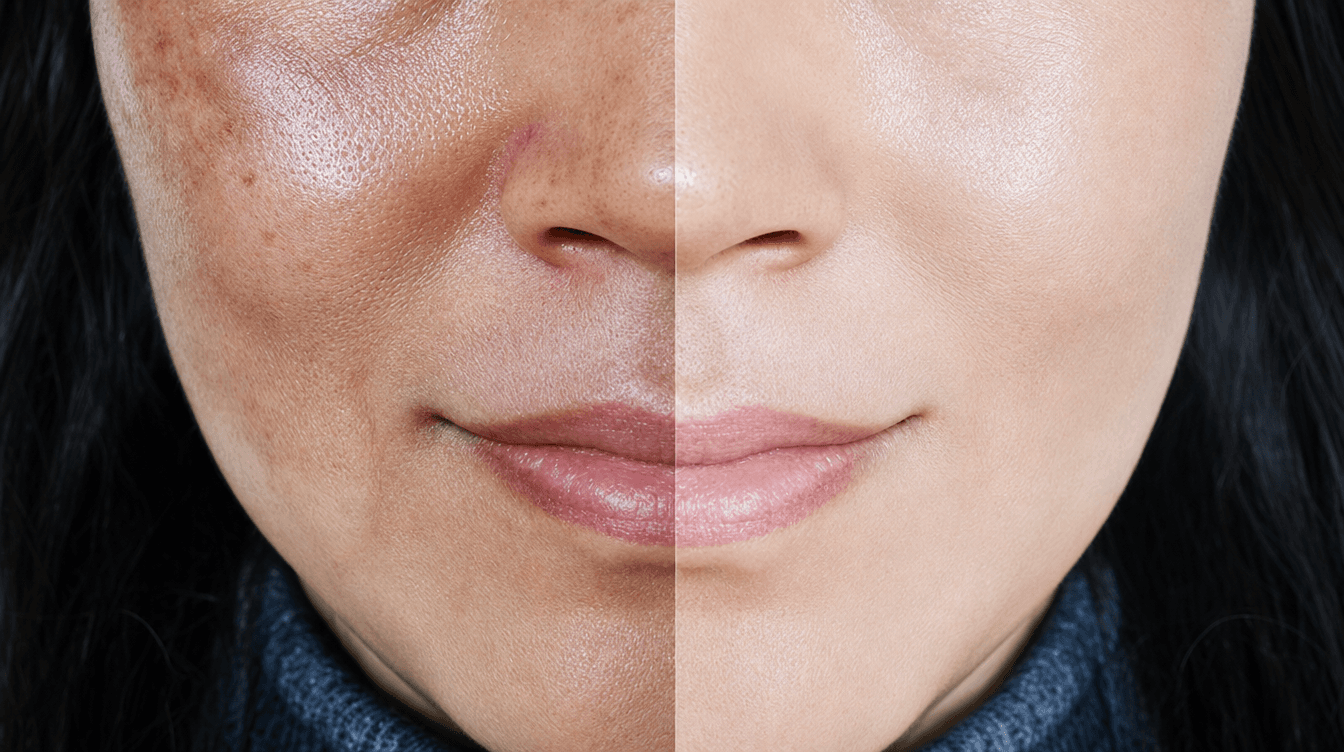
Melasma is one of the most common and most frustrating pigmentary conditions we see in clinic. It presents as symmetrical brown-grey patches, usually across the cheeks, forehead, and upper lip, and it disproportionately affects women with darker skin phototypes (Fitzpatrick III–VI) [1,2].
What causes melasma?
Melasma is multifactorial. Ultraviolet and even visible light exposure are the strongest triggers, stimulating melanocytes to overproduce pigment [3]. Hormonal fluctuations such as pregnancy, the oral contraceptive pill, and hormone replacement therapy, are closely linked, which is why melasma is often called the "mask of pregnancy" [1,2]. Genetics also play a role, with a strong family history seen in many patients, alongside contributing factors like thyroid dysfunction, certain medications, and heat exposure [1,2].
Classifying melasma
Before starting treatment, it's worth identifying which type you're dealing with, as this shapes prognosis and modality selection. Under Wood's lamp examination, melasma is broadly classified as epidermal (pigment confined to the upper skin layers, with accentuated contrast under the lamp and generally the best response to topical therapy), dermal (pigment sits deeper, contrast is less pronounced, and results are slower and more modest), or mixed that is the most common presentation in clinical practice [1,2]. This classification is a useful starting point for setting realistic expectations with patients, though clinical judgement and treatment response often matter more than any single test.
Treatment guidelines for melasma
Because melasma is a chronic, relapsing condition, management is about control rather than a one-off cure [4]. Strict, daily broad-spectrum sunscreen (including protection against visible light with iron oxide tints) is non-negotiable and underpins every other treatment [4]. First-line topicals include hydroquinone, triple combination creams (hydroquinone, tretinoin, and a mild corticosteroid), azelaic acid, and tranexamic acid, used topically or in select cases orally [4,5].
Where the Q-switched Nd:YAG laser fits in
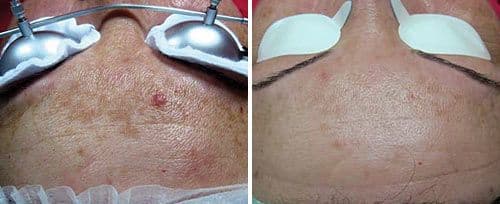
For resistant or deeper pigment, low-fluence Q-switched Nd:YAG (1064nm) "laser toning" is a valuable adjunct [6,7]. Its longer wavelength targets melanin while sparing the epidermis, reducing the risk of post-inflammatory hyperpigmentation compared with more aggressive modalities [6]. Sessions are typically low-energy and repeated weekly, but settings must be conservative, overtreatment risks rebound pigmentation or mottled hypopigmentation [8]. Laser should always be paired with rigorous sun protection and topical maintenance for lasting results [7].
The bottom line
Melasma rarely responds to a single intervention, and it can relapse even after excellent clearance if sun protection lapses. The most durable results come from a layered approach including daily photoprotection as the foundation, topical agents to maintain gains, and laser reserved for resistant pigment under conservative, expert-guided settings [4].
References
- Zheng Q, et al. Understanding Melasma: From Pathogenesis to Innovative Treatments. Dermatologic Therapy. 2024. https://onlinelibrary.wiley.com/doi/full/10.1155/2024/2206130
- Pathogenesis of Melasma Explained. PMC, National Institutes of Health. https://pmc.ncbi.nlm.nih.gov/articles/PMC12207721/
- Exposure factors in the occurrence and development of melasma (Review). PMC. https://pmc.ncbi.nlm.nih.gov/articles/PMC10895611/
- Delphi consensus on melasma management by international experts and Pigmentary Disorders Society. PubMed. https://pubmed.ncbi.nlm.nih.gov/40996222/
- Prescribing practices of tranexamic acid for melasma: Delphi consensus from the Pigmentary Disorders Society. Indian Journal of Dermatology, Venereology and Leprology. https://ijdvl.com/prescribing-practices-of-tranexamic-acid-for-melasma-delphi-consensus-from-the-pigmentary-disorders-society/
- Efficacy and safety of Q-switched 1,064-nm neodymium-doped yttrium aluminum garnet laser treatment of melasma. PubMed. https://pubmed.ncbi.nlm.nih.gov/21615824/
- The Low-Fluence Q-Switched Nd:YAG Laser Treatment for Melasma: A Systematic Review. https://www.researchgate.net/publication/362045129_The_Low-Fluence_Q-Switched_NdYAG_Laser_Treatment_for_Melasma_A_Systematic_Review
- Danger of Low Fluence Q-switched Nd:YAG Laser Treatment for Melasma — So-called "Laser Toning" (case report). https://www.researchgate.net/publication/318998277_Danger_of_Low_Fluence_Q-switched_NdYAG_Laser_Treatment_for_Melasma--So-calledLaser_Toning
Frequently asked questions
What causes melasma? Melasma is multifactorial. Ultraviolet and even visible light exposure are the strongest triggers, stimulating melanocytes to overproduce pigment. Hormonal fluctuations — pregnancy, the oral contraceptive pill and hormone replacement therapy — are closely linked, and genetics, thyroid dysfunction, certain medications and heat exposure all contribute.
Can melasma be cured? No. Melasma is a chronic, relapsing condition, so management is about control rather than a one-off cure. It can relapse even after excellent clearance if sun protection lapses, which is why daily photoprotection is treated as the foundation rather than an add-on.
What is the difference between epidermal, dermal and mixed melasma? Under Wood's lamp examination, epidermal melasma has pigment confined to the upper skin layers, shows accentuated contrast and generally responds best to topical therapy. In dermal melasma the pigment sits deeper, contrast is less pronounced, and results are slower and more modest. Mixed is the most common presentation in clinical practice.
Does sunscreen really make a difference to melasma? Yes. Strict, daily broad-spectrum sunscreen — including protection against visible light with iron oxide tints — is non-negotiable and underpins every other treatment. Visible light, not just UV, is a trigger, which is why an ordinary UV-only sunscreen is not sufficient on its own.
Is laser suitable for melasma? For resistant or deeper pigment, low-fluence Q-switched Nd:YAG (1064nm) "laser toning" is a valuable adjunct. Its longer wavelength targets melanin while sparing the epidermis, reducing the risk of post-inflammatory hyperpigmentation compared with more aggressive modalities. Settings must be conservative — overtreatment risks rebound pigmentation or mottled hypopigmentation — and suitability has to be assessed in person by an AHPRA-registered practitioner.
Why is melasma called the "mask of pregnancy"? Because hormonal fluctuations are so closely linked to it. Pregnancy, the oral contraceptive pill and hormone replacement therapy are all associated with melasma, and the symmetrical patches across the cheeks, forehead and upper lip give it a mask-like distribution.
| Type | Where the pigment sits | Contrast under Wood's lamp | Response to topical therapy |
|---|---|---|---|
| Epidermal | Confined to the upper skin layers | Accentuated | Generally the best response |
| Dermal | Sits deeper | Less pronounced | Slower and more modest |
| Mixed | — | — | The most common presentation in clinical practice |
Table 1. The Wood's lamp classification exactly as set out above; a dash marks a characteristic the source does not specify.
HamptonShow on map
425a Hampton Street, Hampton VIC 3188, Australia
CastlecragShow on map
77A Edinburgh Road, Castlecrag NSW 2068, Australia
Frequently asked questions
What causes melasma?
Melasma is multifactorial. Ultraviolet and even visible light exposure are the strongest triggers, stimulating melanocytes to overproduce pigment. Hormonal fluctuations — pregnancy, the oral contraceptive pill and hormone replacement therapy — are closely linked, and genetics, thyroid dysfunction, certain medications and heat exposure all contribute.
Can melasma be cured?
No. Melasma is a chronic, relapsing condition, so management is about control rather than a one-off cure. It can relapse even after excellent clearance if sun protection lapses, which is why daily photoprotection is treated as the foundation rather than an add-on.
What is the difference between epidermal, dermal and mixed melasma?
Under Wood's lamp examination, epidermal melasma has pigment confined to the upper skin layers, shows accentuated contrast and generally responds best to topical therapy. In dermal melasma the pigment sits deeper, contrast is less pronounced, and results are slower and more modest. Mixed is the most common presentation in clinical practice.
Does sunscreen really make a difference to melasma?
Yes. Strict, daily broad-spectrum sunscreen — including protection against visible light with iron oxide tints — is non-negotiable and underpins every other treatment. Visible light, not just UV, is a trigger, which is why an ordinary UV-only sunscreen is not sufficient on its own.
Is laser suitable for melasma?
For resistant or deeper pigment, low-fluence Q-switched Nd:YAG (1064nm) laser toning is a valuable adjunct. Its longer wavelength targets melanin while sparing the epidermis, reducing the risk of post-inflammatory hyperpigmentation compared with more aggressive modalities. Settings must be conservative — overtreatment risks rebound pigmentation or mottled hypopigmentation — and suitability has to be assessed in person by an AHPRA-registered practitioner.
Why is melasma called the mask of pregnancy?
Because hormonal fluctuations are so closely linked to it. Pregnancy, the oral contraceptive pill and hormone replacement therapy are all associated with melasma, and the symmetrical patches across the cheeks, forehead and upper lip give it a mask-like distribution.
Ready to book?
Find a clinicRelated reading

Skin & Facials
Fotona4D Laser Facial: How the Non-Invasive Anti-Ageing Treatment Works
Fotona4D is a non-invasive facial laser that combines two wavelengths to firm and refresh skin in four steps — no surgery or injections. An honest look at how it works, who it suits, the safety considerations and what results are realistic in Australia.
19 JULY 2026
Skin & Facials
The Power of Two: Why MOXI and BBL HERO Are Better Together
MOXI's gentle fractional resurfacing and BBL HERO's broadband light reach different layers of the skin. Paired in a single visit they clear pigment, even tone, and build collagen faster than either device alone.
21 JANUARY 2026
Skin & Facials
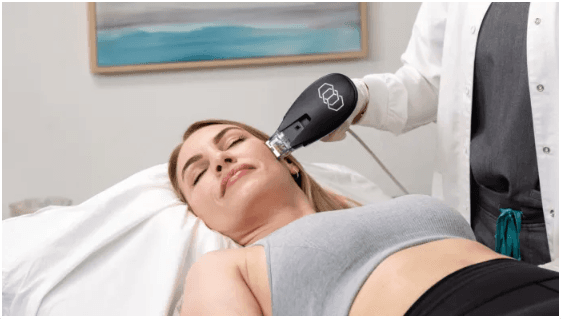
Achieving 'Glass Skin' Outcomes with the Power of InMode Optimas Max
InMode's Optimas Max platform layers laser, IPL, and radio-frequency in one system to refine texture, tone, and clarity — the technology behind the coveted, luminous 'glass skin' finish.
3 JANUARY 2026